


In the rapidly evolving landscape of automotive technology, autonomous driving has emerged as one of the most transformative and promising advancements. As a leading supplier of Mercedes - Benz OEM handle cameras, I've been closely involved in understanding the capabilities and limitations of these cameras in the context of autonomous driving features. This blog post aims to explore whether the Mercedes - Benz OEM handle camera can be used for autonomous driving features.
The Role of Cameras in Autonomous Driving
Autonomous driving systems rely on a multitude of sensors to perceive the surrounding environment accurately. Cameras are among the most crucial sensors as they can capture high - resolution visual data, similar to how the human eye perceives the world. They are essential for tasks such as object detection (pedestrians, other vehicles, traffic signs), lane detection, and scene recognition.
Mercedes - Benz, a pioneer in automotive innovation, has always been at the forefront of integrating advanced technologies into its vehicles. The OEM handle cameras are designed to provide a specific set of functions, primarily related to rear - view assistance. But can they be repurposed or expanded to support autonomous driving features?
Features of Mercedes - Benz OEM Handle Cameras
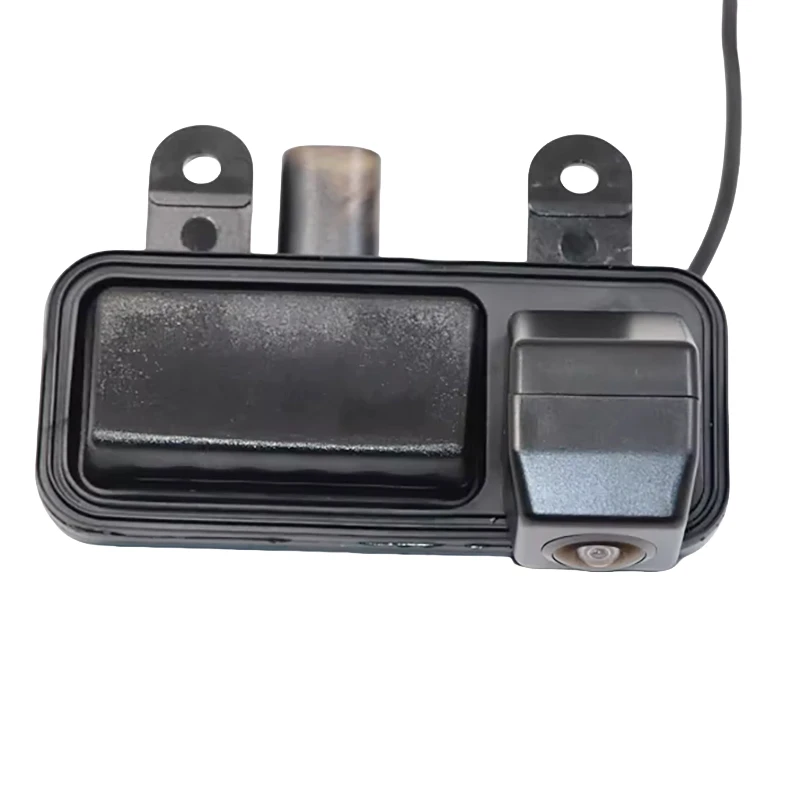
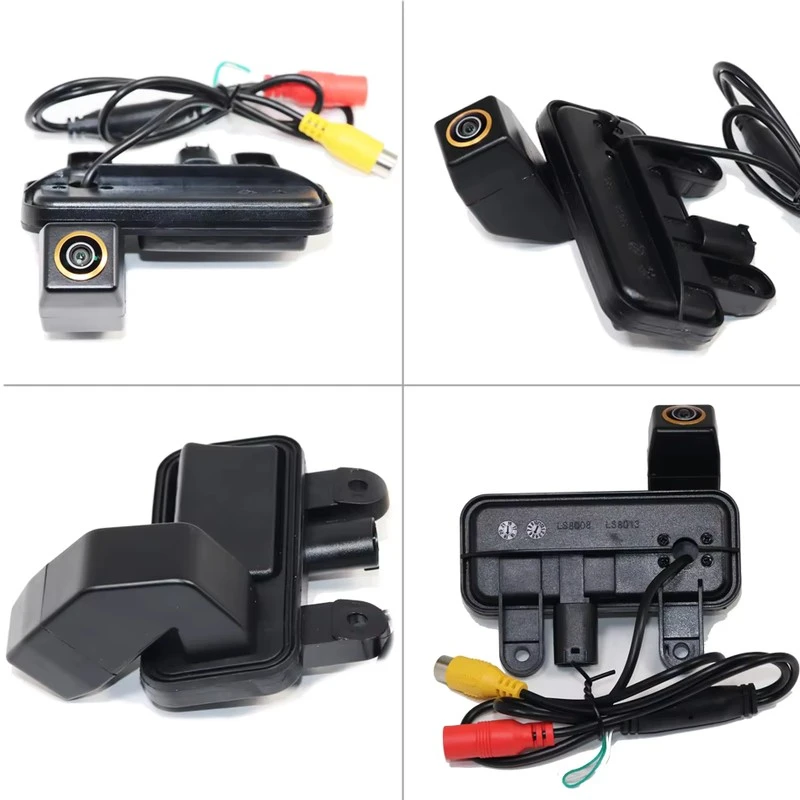
Our Mercedes - Benz OEM handle cameras are engineered to meet the high - quality standards set by the brand. They offer several key features:
- High - Definition Imaging: These cameras are capable of capturing clear and sharp images, even in low - light conditions. This is achieved through advanced image sensor technology and sophisticated image processing algorithms.
- Wide - Angle View: A wide - angle lens is incorporated to provide a broad field of view, which is particularly useful for rear - view applications. It allows drivers to have a comprehensive view of the area behind the vehicle.
- Durability: Built to withstand harsh automotive environments, these cameras are resistant to dust, water, and vibrations. This ensures long - term reliability and performance.
Potential for Autonomous Driving
When it comes to autonomous driving, the Mercedes - Benz OEM handle cameras have both potential and limitations.
Advantages
-
Visual Data: The high - definition images captured by these cameras can be used for various autonomous driving tasks. For example, they can assist in detecting other vehicles, pedestrians, and obstacles in the rear - view area. This data can be integrated into the vehicle's overall perception system to make informed decisions during maneuvers such as reversing or parking.
-
Existing Infrastructure: Since these cameras are already part of the vehicle's OEM equipment, there is an existing infrastructure for power supply, data transmission, and mounting. This can potentially reduce the cost and complexity of integrating them into an autonomous driving system.
-
Brand Compatibility: As an OEM product, these cameras are designed to be fully compatible with Mercedes - Benz vehicles. This means that they can seamlessly integrate with the vehicle's existing electronic control units (ECUs) and software systems, ensuring a smooth and reliable operation.
Limitations
- Field of View: While the wide - angle view is beneficial for rear - view assistance, it may not be sufficient for comprehensive autonomous driving. Autonomous vehicles need to have a 360 - degree view of their surroundings, and a single rear - view camera has obvious limitations in terms of coverage.
- Lack of Depth Information: Cameras alone have difficulty in accurately measuring the distance to objects. Unlike LiDAR sensors, which can provide precise depth information, cameras rely on algorithms to estimate distances based on visual cues. This can lead to inaccuracies, especially in complex scenarios.
- Limited Functionality: The OEM handle cameras are primarily designed for rear - view applications. They may not have the necessary features or processing power to support more advanced autonomous driving functions such as real - time mapping, high - speed object tracking, and complex decision - making.
Case Studies of Camera Usage in Autonomous Driving
To better understand the potential of our cameras, let's look at some real - world examples of camera usage in autonomous driving.
In some semi - autonomous parking systems, rear - view cameras are used to assist the vehicle in parking itself. The camera captures the image of the parking space, and the vehicle's control system uses this data to calculate the optimal parking trajectory. This shows that rear - view cameras can play a significant role in certain autonomous driving scenarios.
However, for fully autonomous driving on public roads, a combination of multiple sensors is required. Tesla, for example, uses a suite of cameras, along with radar and ultrasonic sensors, to achieve a high level of autonomy. Their cameras are strategically placed around the vehicle to provide a comprehensive view of the surroundings.
Our Product Range
We offer a diverse range of Mercedes - Benz OEM handle cameras, each tailored to specific vehicle models. For instance, the Mercedes - Benz B180/B200 Dedicated CVBS Reverse Camera is specifically designed for the B180 and B200 models. It provides clear rear - view images with high - quality CVBS output.
The 2012 - 2015 Mercedes - Benz GLK300 Reverse Camera is engineered to fit the GLK300 models from 2012 to 2015. It offers a wide - angle view and excellent image clarity, enhancing the safety and convenience of reversing.
The 2016 - 2020 Mercedes - Benz B - Class/E - Class Reverse Camera is optimized for the B - Class and E - Class models from 2016 to 2020. It features advanced image processing technology to ensure clear and accurate rear - view images.
Future Developments
As the demand for autonomous driving continues to grow, we are investing in research and development to enhance the capabilities of our Mercedes - Benz OEM handle cameras. We are exploring ways to improve the field of view, add depth - sensing capabilities, and increase the processing power of the cameras.
One potential approach is to integrate additional sensors or technologies with the existing cameras. For example, we could combine the camera with a small - scale LiDAR sensor to provide more accurate depth information. This would enhance the camera's ability to support autonomous driving features.
Conclusion
In conclusion, while the Mercedes - Benz OEM handle cameras have certain limitations in terms of fully supporting autonomous driving features, they do have potential in specific scenarios. Their high - definition imaging, wide - angle view, and brand compatibility make them a valuable asset for certain aspects of autonomous driving, such as parking assistance and rear - view object detection.
As a supplier, we are committed to continuously improving our products to meet the evolving needs of the automotive industry. We believe that with further technological advancements and integration with other sensors, our cameras can play an even more significant role in the future of autonomous driving.
If you are interested in our Mercedes - Benz OEM handle cameras or would like to discuss potential applications in autonomous driving, we invite you to contact us for a detailed procurement discussion. We are eager to work with you to explore the possibilities and find the best solutions for your needs.
References
- SAE International. "Taxonomy and Definitions for Terms Related to Driving Automation Systems for On - Road Motor Vehicles."
- IEEE Transactions on Intelligent Transportation Systems. Various research papers on sensor technologies for autonomous driving.


