


As a supplier of brake light series reversing cameras, I often encounter various questions from customers. One of the frequently asked questions is whether brake light series reversing cameras have a fish-eye lens. In this blog post, I will delve into this topic to provide you with a comprehensive understanding.
What is a Fish - Eye Lens?
A fish - eye lens is a special type of wide - angle lens that can capture an extremely wide field of view. It typically has a field of view of more than 180 degrees, sometimes even approaching 360 degrees. The distortion caused by a fish - eye lens is characteristic, with straight lines appearing curved, especially towards the edges of the image. This distortion gives the image a unique, spherical appearance, resembling the view through a fish's eye, hence the name.
Advantages of Fish - Eye Lenses in Reversing Cameras
- Wide Field of View: For brake light series reversing cameras, having a wide field of view is crucial. When a vehicle is reversing, the driver needs to be aware of obstacles, pedestrians, and other vehicles in the rear area. A fish - eye lens can provide a much broader view compared to a normal lens. For example, a regular lens might cover a field of view of around 120 degrees, while a fish - eye lens can easily reach 180 degrees or more. This means that the driver can see more of what's behind the vehicle, reducing blind spots and increasing safety.
- Installation Flexibility: Since fish - eye lenses can capture a wide area, they offer more flexibility in terms of installation. You don't have to be overly precise about the camera's orientation to get a good view of the rear. This is particularly useful for brake light series reversing cameras, as the installation space in the brake light area may be limited, and it might be difficult to achieve a perfectly centered and well - angled installation.
Disadvantages of Fish - Eye Lenses in Reversing Cameras
- Image Distortion: The most obvious drawback of fish - eye lenses is the significant distortion in the image. Straight lines, such as the edges of a parking space or the sides of a wall, will appear curved. This can make it challenging for the driver to accurately judge distances and the shape of objects. For example, a long and narrow object might look shorter and wider than it actually is, which could lead to misjudgments when reversing.
- Reduced Image Quality at the Edges: Due to the wide - angle nature of fish - eye lenses, the image quality tends to degrade towards the edges. The resolution may be lower, and there may be more chromatic aberration and vignetting. This can make it difficult to clearly identify small objects or details at the edges of the field of view.
Do Our Brake Light Series Reversing Cameras Have Fish - Eye Lenses?
In our product line, we offer both types of brake light series reversing cameras: those with fish - eye lenses and those without.
For customers who prioritize a wide field of view and are willing to tolerate some degree of distortion, our cameras with fish - eye lenses are a great choice. These cameras are suitable for various vehicles, including cars, commercial vehicles, buses, MPVs, and vans. For example, our Multi - Brand High - Mount Brake Light Camera for Renault/Opel/Nissan is equipped with a high - quality fish - eye lens. It provides an almost 180 - degree field of view, allowing drivers of these popular brands to have a comprehensive view of the rear when reversing.
On the other hand, if you prefer a more accurate and undistorted image, we also have brake light series reversing cameras with normal lenses. These cameras are ideal for situations where precise distance judgment is required, such as in tight parking spaces. Our Citroën Berlingo/Peugeot Partner High - Mount Brake Light Camera offers a clear and distortion - free view, which is very useful for the drivers of these specific models.
Case Study: Mercedes - Benz Sprinter
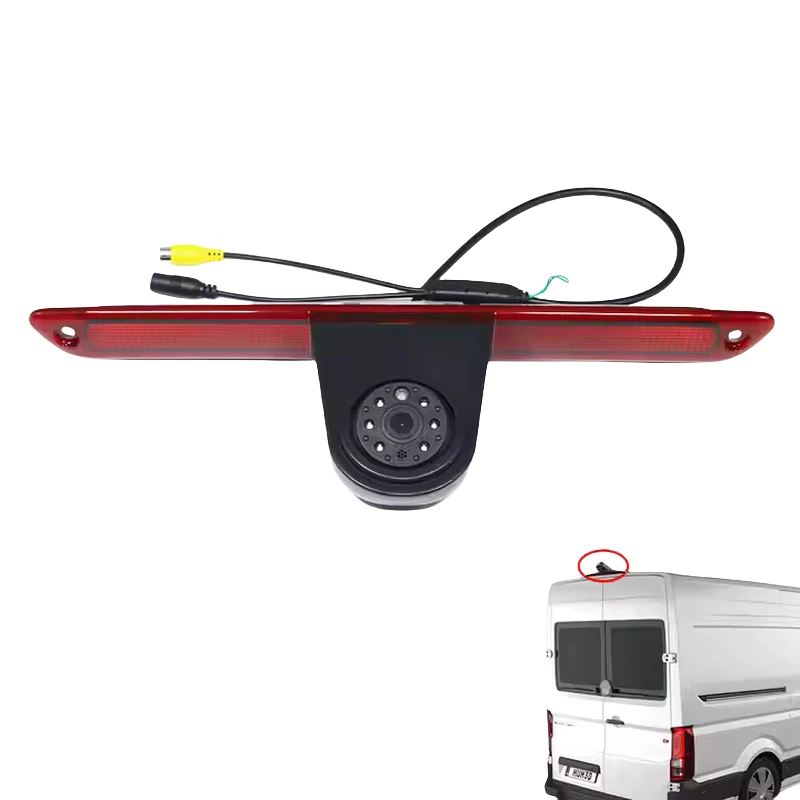
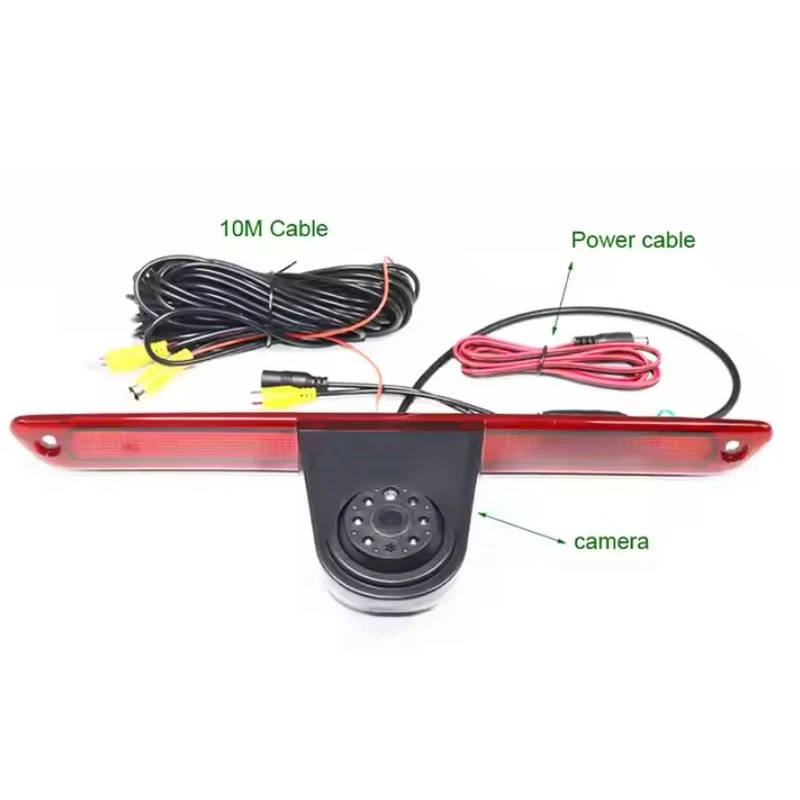
The Mercedes - Benz Sprinter is a large commercial vehicle, and having a reliable reversing camera is essential for its safety. Our Mercedes - Benz Sprinter High - Mount Brake Light Camera comes in two versions: one with a fish - eye lens and one without.
The version with a fish - eye lens is very popular among Sprinter drivers who often operate in busy loading docks or crowded urban areas. The wide field of view allows them to quickly assess the situation behind the vehicle, even when there are multiple obstacles or other vehicles in the vicinity.
However, for drivers who need to park the Sprinter in a precise location, such as in a narrow loading bay, the non - fish - eye lens version is preferred. The undistorted image helps them to accurately align the vehicle and avoid hitting the sides of the bay.
Conclusion
Whether brake light series reversing cameras have a fish - eye lens depends on the specific needs of the customers. Fish - eye lenses offer a wide field of view and installation flexibility, but they come with the trade - off of image distortion and reduced edge quality. At our company, we understand the diverse requirements of different vehicle owners, and that's why we offer a range of options to meet those needs.
If you are interested in our brake light series reversing cameras, whether you need a camera with a fish - eye lens or a normal lens, we are here to assist you. We can provide you with detailed product information, technical support, and competitive pricing. Please feel free to contact us for procurement and further discussions. We look forward to working with you to enhance the safety of your vehicles.
References
- "Lens Design and Optics" by Smith, John. A comprehensive book on lens technology and its applications in various fields, including automotive cameras.
- "Automotive Safety and Reversing Systems" by Johnson, Emily. This publication focuses on the importance of reversing cameras in vehicle safety and the different types of lenses used.


