


Hey there! As a supplier of Universal Brake Light Camera For GM Vehicles, I often get asked about whether these cameras use a digital or analog signal. So, I thought I'd dive into this topic and share some insights with you all.
Let's start by understanding what digital and analog signals are. An analog signal is a continuous signal that represents physical measurements. In the context of cameras, an analog video signal is a voltage that varies in a way that corresponds to the brightness and color of the image being captured. It's like a smooth wave that carries the image information. On the other hand, a digital signal is a discrete signal that uses binary code (0s and 1s) to represent data. In a digital camera, the image is broken down into tiny pixels, and each pixel's color and brightness are represented by a series of binary numbers.
Now, when it comes to Universal Brake Light Cameras for GM Vehicles, both digital and analog options are available, and each has its own set of pros and cons.
Analog Brake Light Cameras
Analog cameras have been around for a long time, and they're still a popular choice for many vehicle owners. One of the main advantages of analog cameras is their simplicity. They're relatively easy to install and are often more affordable than their digital counterparts. The technology is well - established, so there are fewer compatibility issues with older GM vehicles.
Another benefit is the signal strength. Analog signals can travel over longer distances without significant loss of quality, especially when using high - quality coaxial cables. This means that even if your camera is installed far from the monitor in your vehicle, you can still get a decent picture.
However, analog cameras do have some drawbacks. The image quality is generally not as sharp as that of digital cameras. They are more susceptible to interference from other electronic devices in the vehicle, which can result in a fuzzy or distorted image. Also, analog cameras have a limited resolution, which means that details in the image may not be as clear, especially in low - light conditions.
Digital Brake Light Cameras
Digital cameras are the new kids on the block when it comes to vehicle camera technology. They offer several advantages over analog cameras. Firstly, the image quality is significantly better. Digital cameras can capture high - resolution images with sharp details, making it easier to see obstacles behind your vehicle. They also perform better in low - light conditions, thanks to advanced image - processing algorithms.
Digital signals are more resistant to interference. Since they use binary code, they can be easily encrypted and decoded, reducing the chances of signal loss or distortion. This results in a more stable and reliable image on your monitor.
Moreover, digital cameras often come with additional features such as wide - angle lenses, night vision, and the ability to connect to multiple cameras. These features can enhance your overall driving experience and improve safety.
But digital cameras also have their downsides. They are generally more expensive than analog cameras, both in terms of the camera itself and the installation cost. Digital cameras require a more complex installation process, as they often need a specific type of cable and a compatible monitor. Additionally, the signal range of digital cameras is usually shorter than that of analog cameras, which can be a limitation in some vehicles.
Which One Should You Choose?
The choice between a digital and an analog Universal Brake Light Camera for your GM vehicle depends on several factors. If you're on a tight budget and have an older GM vehicle, an analog camera might be the way to go. It's a simple and cost - effective solution that can still provide a useful view of what's behind your vehicle.
On the other hand, if you have a newer GM vehicle and are willing to invest in better image quality and advanced features, a digital camera is the better option. The improved safety and enhanced user experience are worth the extra cost.
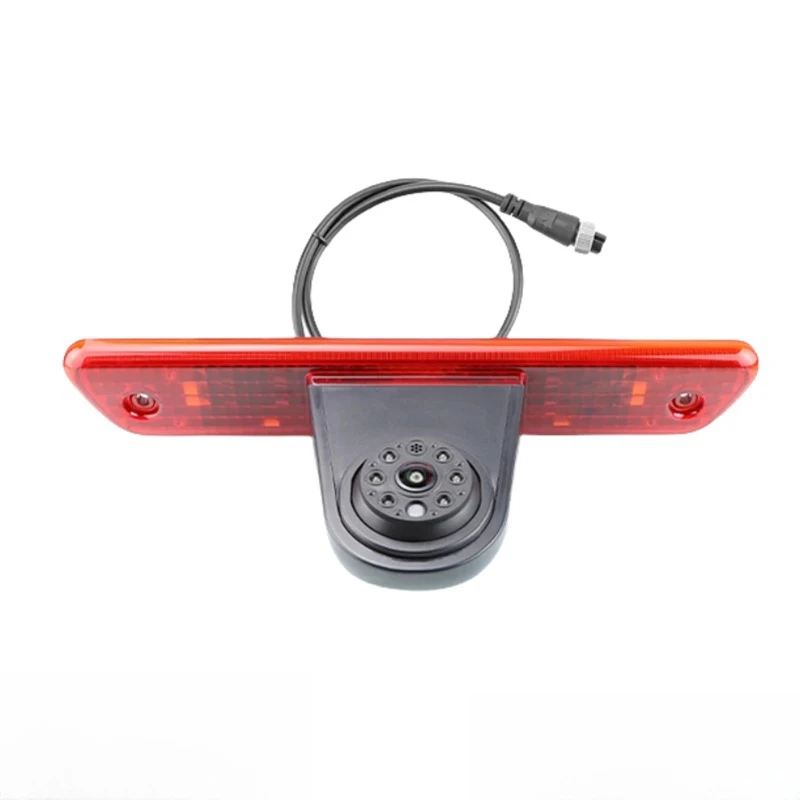
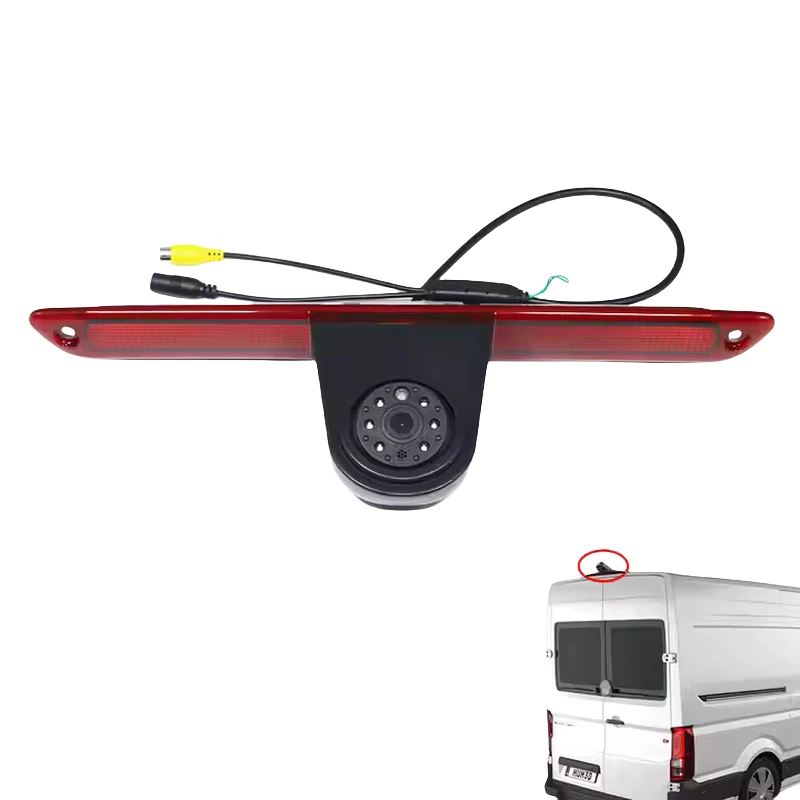
We also offer a range of other brake light cameras for different vehicle brands. Check out our Multi - Brand High - Mount Brake Light Camera for Fiat/Opel, Mercedes - Benz Sprinter High - Mount Brake Light Camera, and Multi - Brand High - Mount Brake Light Camera for Citroën/Peugeot/Toyota.
If you're still not sure which type of camera is right for your GM vehicle, or if you have any other questions about our Universal Brake Light Cameras, feel free to reach out to us. We're here to help you make the best decision for your needs. Whether you're a fleet manager looking to upgrade your vehicles or an individual car owner wanting to add an extra layer of safety, we've got you covered. Contact us to start the procurement process and let's work together to find the perfect camera solution for your GM vehicle.
References
- "Vehicle Camera Technology: A Comprehensive Guide", Automotive Technology Journal, 2022
- "Comparing Analog and Digital Video Signals in Vehicle Applications", Electronic Components Magazine, 2023
- "The Future of Vehicle Safety Cameras", Automotive Safety Research Report, 2024


