


Hey there! As a supplier of dynamic trajectory reverse cameras, I've seen firsthand the amazing benefits these gadgets bring to drivers. They're like a trusty co - pilot when you're backing up, showing you where you're going and helping you avoid those pesky bumps and scrapes. But just like any piece of tech, they've got their limitations. Let's dig into what those are.
1. Environmental Limitations
Weather Conditions
One of the biggest hurdles for dynamic trajectory reverse cameras is the weather. Rain, snow, and fog can really mess with the camera's performance. When it's pouring rain, water droplets can accumulate on the camera lens. This creates a blurry or distorted image, making it hard to see the actual path your vehicle is going to take. The dynamic trajectory lines that are supposed to guide you accurately might seem off - target because of the obscured view.
Snow is another pain. It can cover the camera lens completely, blocking your view altogether. And even if it's just a light dusting, the white background of the snow can make it difficult for the camera to distinguish between different objects. Fog is no better. The thick mist scatters light, reducing the camera's visibility and making it challenging to get a clear picture of the area behind your car.
Lighting Conditions
Lighting plays a huge role too. In bright sunlight, the camera might get overexposed. This means that the image on the screen can be washed out, with details lost in a sea of white. You might not be able to see small objects or obstacles clearly, even though the dynamic trajectory lines are still visible.
On the flip side, in low - light conditions like at night or in a dimly lit parking garage, the camera's performance can drop significantly. The image might be grainy or too dark, and it becomes a struggle to make out the trajectory lines accurately. Some cameras come with night - vision capabilities, but they're not always perfect.
2. Technical Limitations
Camera Angle and Field of View
The camera's angle and field of view are set during installation. While they're designed to cover as much area as possible, there are still blind spots. These blind spots can hide small objects, pets, or even children that could be in the path of your vehicle. The dynamic trajectory lines are calculated based on the camera's view, so if there's something in the blind spot, the lines won't account for it.
For example, if the camera is installed too high or too low, it might not capture the ground close to the rear of the vehicle properly. This means that small curbs or low - lying obstacles could go unnoticed, even though the trajectory lines suggest a clear path.
Accuracy of Trajectory Calculations
The dynamic trajectory lines are calculated based on the vehicle's steering angle, speed, and other factors. However, these calculations aren't always 100% accurate. There can be small errors in the sensors that measure the steering angle or speed. These errors can cause the trajectory lines to deviate slightly from the actual path your vehicle will take.

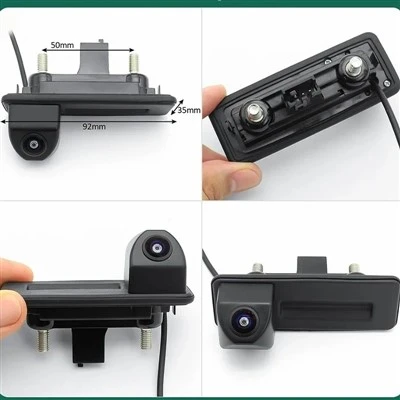
Also, if you're making sudden or complex maneuvers, like sharp turns or quick reversals, the camera might not be able to adjust the trajectory lines fast enough. This can lead to a situation where the lines on the screen don't match the real - world path of your vehicle.
3. Vehicle - Specific Limitations
Vehicle Modifications
If you've made modifications to your vehicle, such as changing the suspension, adding a trailer hitch, or installing larger tires, it can affect the performance of the dynamic trajectory reverse camera. These modifications can change the vehicle's dimensions and the way it moves.
For instance, if you install larger tires, the vehicle's turning radius and the distance it travels in reverse will change. But the camera's trajectory calculations are based on the original vehicle specifications. So, the dynamic trajectory lines might not accurately represent the path your modified vehicle will take.
Compatibility Issues
Not all vehicles are created equal when it comes to dynamic trajectory reverse cameras. Some older vehicles might not have the necessary electrical systems or interfaces to support the camera properly. This can lead to issues like poor image quality, intermittent connectivity, or the inability to display the dynamic trajectory lines at all.
Even among newer vehicles, there can be compatibility problems. Different car manufacturers use different protocols and standards for their onboard systems. So, a camera that works perfectly with one make and model might not work at all with another. For example, our Audi Q3/Q5/A5 Exclusive MIB3 Flush - Mount Reverse Camera is specifically designed for Audi vehicles with the MIB3 system. Using it on a non - compatible vehicle would be a waste of time and money.
4. User - Related Limitations
Over - Reliance on the Camera
Some drivers tend to rely too heavily on the dynamic trajectory reverse camera. They assume that as long as the lines on the screen look clear, they're good to go. This over - reliance can be dangerous. The camera is just a tool, and it has its limitations as we've discussed.
Drivers should still use their mirrors and look over their shoulders to double - check for any potential hazards. Ignoring these basic safety practices because of the camera can lead to accidents.
Lack of Understanding
Not all drivers fully understand how the dynamic trajectory reverse camera works. They might not know how the trajectory lines are calculated or what factors can affect their accuracy. This lack of understanding can lead to mistakes. For example, a driver might not realize that the lines can be inaccurate if the vehicle has been modified or if the camera is dirty.
Our Solutions and Products
Despite these limitations, we're constantly working to improve our dynamic trajectory reverse cameras. We offer a wide range of products, such as the MQB PQ MIB Original Stereo CanBus Car Reversing Parking Camera and the Toyota OEM Protocol Dynamic Guideline Camera (10.25" Screen Edition). These cameras are designed to minimize the limitations as much as possible.
We use advanced sensors and algorithms to improve the accuracy of the trajectory calculations. Our cameras also have features like anti - glare and water - resistant lenses to handle different environmental conditions. And we provide detailed installation and user guides to help drivers understand how to use the cameras effectively.
If you're interested in learning more about our dynamic trajectory reverse cameras or want to discuss a potential purchase, don't hesitate to reach out. We're here to help you find the best solution for your vehicle and driving needs.
References
- Smith, J. (2020). "The Impact of Environmental Factors on Automotive Camera Systems." Journal of Automotive Technology.
- Johnson, A. (2021). "Technical Challenges in Dynamic Trajectory Reverse Cameras." Automotive Engineering Review.


