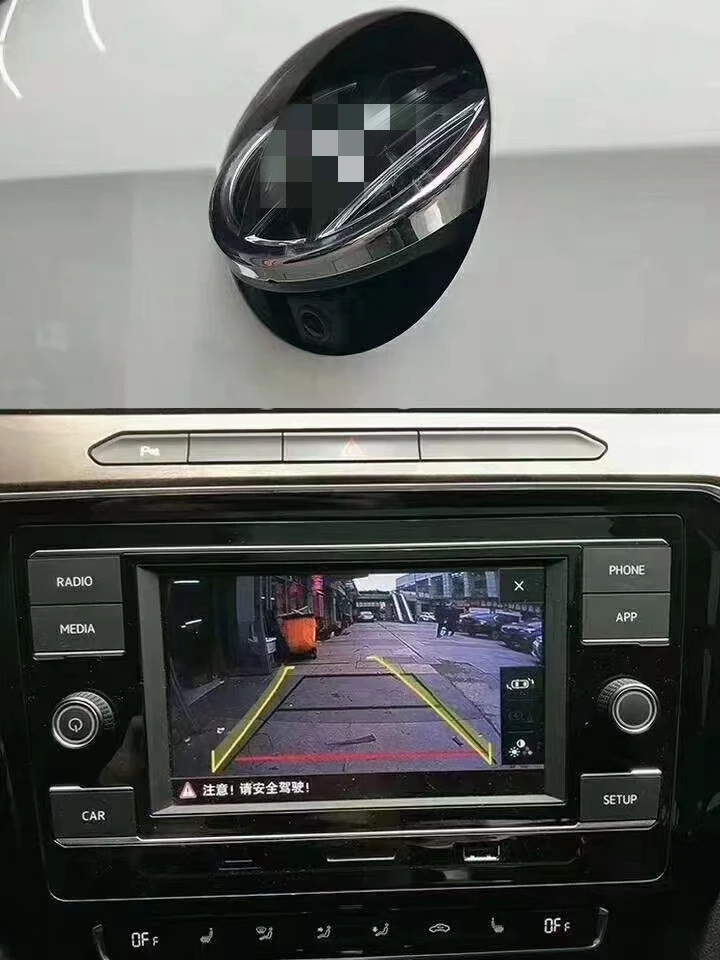
Driven by rapid advancements in automotive intelligence and autonomous driving technologies, automotive cameras are seeing increasingly widespread adoption. According to Gasgoo Auto Research Institute's analysis of intelligent driving configurations in passenger vehicles, the installation volume of front-view and surround-view cameras grew significantly from January to October 2024, achieving penetration rates of 59.9% and 47.9%, respectively. Meanwhile, reversing cameras reached a 39.2% penetration rate, while in-cabin cameras remained relatively low at 19.5%. Side-view and rear-view cameras recorded even lower penetration rates.
Front-View Cameras: ADAS Cornerstone
As critical components for Advanced Driver Assistance Systems (ADAS) and autonomous driving, front-view cameras primarily identify road environments, vehicles, and pedestrians ahead. From January to October 2024, installations surged to 12.947 million units, with penetration hitting 59.9%.
Surround-View & Reversing Camera
Surround-view camera installations reached 34.099 million units (47.9% penetration). Though reversing cameras-one of the earliest widely adopted automotive cameras-achieved 39.2% penetration (6.984 million units), they remain heavily relied upon for safe reversing assistance.
In-Cabin & Niche Cameras Face Challenge
In-cabin cameras recorded 4.712 million installations (19.5% penetration). Despite diverse application scenarios, privacy concerns hinder broader adoption. Side-view cameras (for blind-spot monitoring and lane-changing assistance) and dedicated rear-view cameras (for reversing support) showed lower penetration:
Side-view: 3.972 million units (11.2%)
Rear-view: 1.948 million units (10.9%)
Competitive Landscape: Global vs. Domestic Player
International suppliers like Bosch and Denso dominate the front-view camera market, with Bosch leading through technological prowess and brand strength. Notably, Chinese supplier Sunny Optical rapidly expanded its market share (+139.0% YoY), fueled by strong sales of Li Auto's L-series and Volkswagen models.
Technology Trends & Market Segmentation
Camera Types: Monocular cameras dominate installations across both NEVs and ICE vehicles, with binocular/multi-lens solutions remaining niche.
Vehicle Segmentation: Demand for automotive cameras grows simultaneously across premium and mass-market segments, signaling widespread adoption of intelligent features.
Price-Based Analysis:
¥200k-300k vehicles: Highest segment share for smart cameras; reversing cameras widely equipped.
¥500k+ luxury models: Fast-growing penetration of side-view cameras and advanced configurations.
In-Cabin Cameras: NEVs Lead Innovatio
NEVs accounted for 81.3% of in-cabin camera installations (Jan-Oct 2024). Single-camera setups remain mainstream, though multi-camera solutions are rising. Top-selling NEVs like the Model Y (377,850 units, 99% penetration) spearhead smart cockpit adoption. Other leaders include AITO M7 (171,368 units, 100%) and Li Auto L6 (139,251 units, 99%).
Regional Brand Dynamic
Chinese automakers dominate in-cabin camera adoption (75.1%), reflecting aggressive investment in smart cockpits. Other regions trail:
- American: 4.3%
- Japanese: 5.0%
- European: 15.6%
NEVs overwhelmingly lead in-camera deployment (81.3%), while ICE/HEV models gradually catch up.