

01 Market Explosion Background
In recent years, drivers often face difficulties in accurately obtaining images and information around their vehicles while parking. This has led to frequent accidents and rising fatality rates, creating an urgent need for comprehensive camera assistance. Against this backdrop, the global automotive camera market has experienced explosive growth.
◇ Market Growth Drivers
A recent global automotive camera market report released by Allied Market Research reveals that the market was valued at $11.4 billion last year and is projected to surge to $24.09 billion by 2025, achieving a Compound Annual Growth Rate (CAGR) of 9.7%. This growth trend is primarily attributed to the proliferation of ADAS (Advanced Driver Assistance Systems) and the vigorous development of autonomous driving technology. As an indispensable component of these systems, the automotive camera market holds broad prospects.
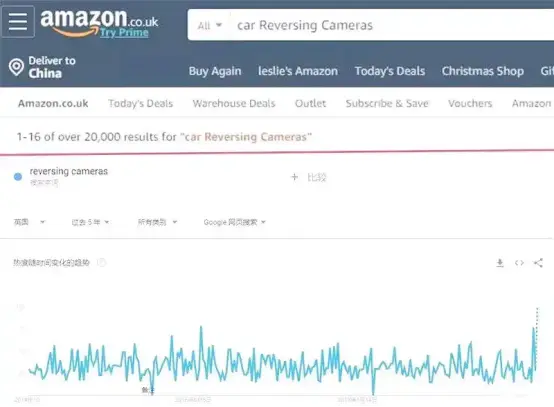
◇ Development of Reversing Cameras
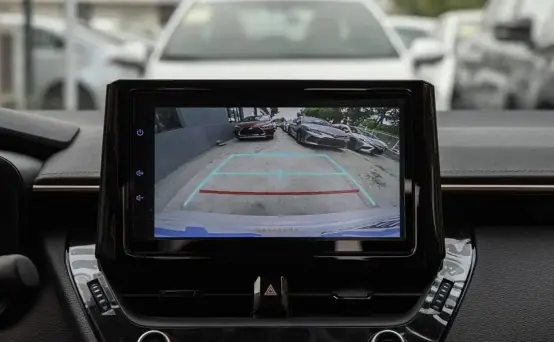
Among these, reversing cameras, which provide real-time video images to eliminate blind spots while reversing, have gained popularity among car owners and become a significant driving force for market growth. They effectively remove blind spots caused by the vehicle's physical structure during reversing, making them highly favored.
02 Reversing Camera Market Overvie
1.1 ◇ Current Market Status
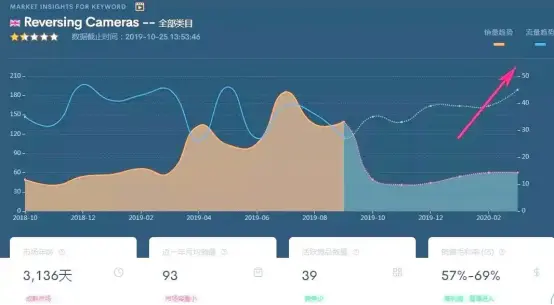
Looking at the overall market, the reversing camera product segment has developed into a relatively mature market. Although current market activity is moderate, both traffic and sales volume continue to show an upward trend, with ideal profit conditions, making it suitable for new sellers to enter. Competition is not yet intense, and subsequent traffic and sales are still rising, with favorable profit margins. Therefore, it is feasible for new sellers to enter this market and seize development opportunities.
1.2 ◇ Product Types and Trends
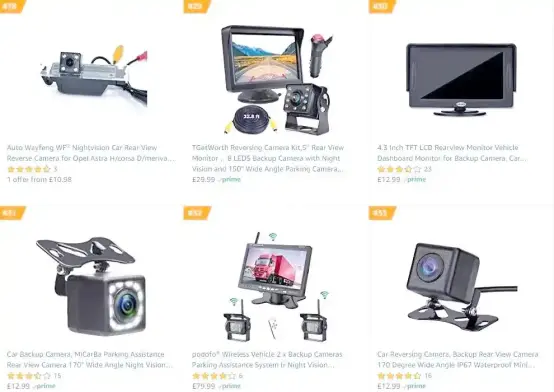
Regarding products, the market is mainly divided into large-screen reversing camera systems for trucks and compact, lightweight cameras for passenger cars. Wireless functionality is gradually becoming standard, offering greater convenience. Products are evolving towards increased intelligence and diversification.
03 Product Features and Challenge
◇ Product Ratings and Pricing Strategy
By scoring the top 100 reversing camera products on the market, we found an average rating as high as 4.3 stars. This fully demonstrates that product quality and stability have gained widespread consumer recognition. Prices vary according to vehicle type: cameras for passenger cars are affordably priced, while products designed for highways or those with integrated display screens command higher prices.
◇ Design Challenges
However, creating a highly-rated reversing camera requires solving the challenge of balancing image clarity with smooth, stable video performance. These two factors can sometimes conflict, necessitating careful technical calibration. Furthermore, as electronic devices typically installed at the rear of vehicles, reversing cameras are exposed to harsh weather conditions for extended periods, potentially affecting product stability. Therefore, these factors must be fully considered during the design and production process to ensure the product maintains excellent performance across various environments.

04 Case Analysis and Market Outloo
◇ Product Case Analysis
Next, we will explore the key features and design considerations of reversing cameras through specific product examples.
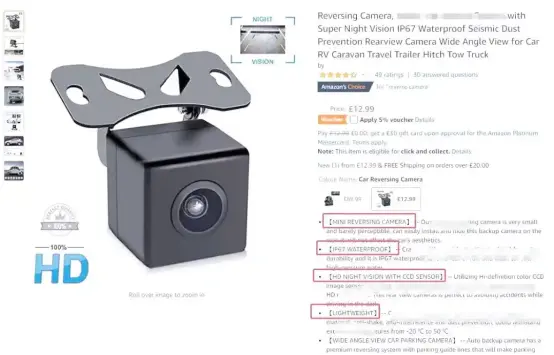
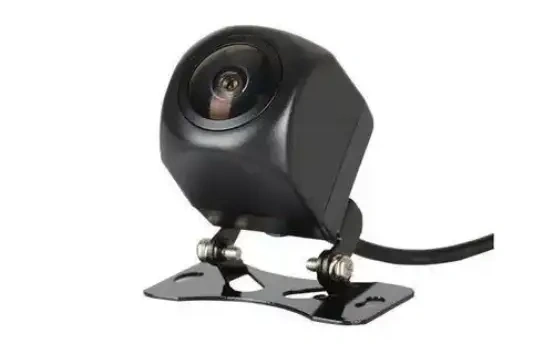
This reversing camera is designed specifically for compact cars. Its small size and simple installation method are highly favored by users, resulting in considerable sales volume. For manufacturers aiming to develop mini reversing cameras, the functional parameters of this product provide valuable references. Small-sized reversing cameras are popular due to their compact form and easy installation. Priced between £10-£20, they are suitable for rapid market entry.
◇ Future Market Trends
❖ Market Analysis
The reversing camera segment market has matured, with stable and reliable product quality, high consumer acceptance, and year-round sales potential. Although infringing products occasionally appear, the overall market order is good and operations are straightforward.
The market is mature and easy to operate. Manufacturers can develop more products tailored to different vehicle models, gradually enriching their product lines and driving further market development. Entry-level products can be positioned in the £10-20 price range. Subsequently, features can be incrementally added to transition towards higher-priced product segments.


