

The specific differences in dynamic trajectory lines across different vehicle models are primarily reflected in the following aspects:
Configuration of Dynamic Trajectory Lines Varies by Model
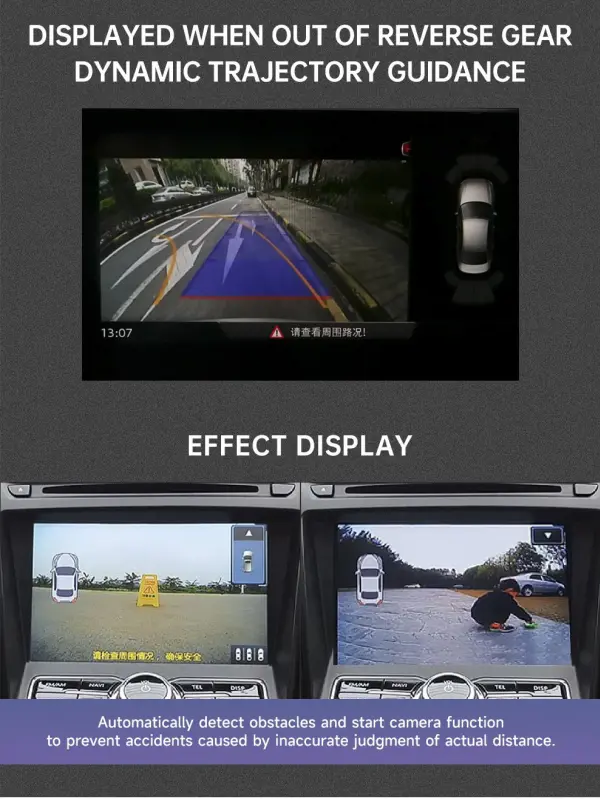
The shape and position of dynamic trajectory lines differ among vehicle models. For example, in the Volkswagen Golf VI, the dynamic trajectory line on the passenger side generally aligns well with the actual reversing path, while the line on the driver's side shows some deviation, particularly when turning the steering wheel clockwise. This indicates that the configuration of dynamic trajectory lines is not only model-dependent but also closely related to the camera's installation position.

Accuracy of Dynamic Trajectory Lines
The accuracy of dynamic trajectory lines varies across models. In the Golf VI, the dynamic trajectory lines are generally consistent with the actual reversing path, but deviations exist on the driver's side. These deviations could potentially affect the driver's judgment, especially in situations requiring precise control of the reversing path.
Configuration Differences Across Models
The configuration of reverse camera systems also differs among vehicle models. For instance, base trim models of the Volkswagen Lavida typically do not include dynamic trajectory lines and only provide a real-time rearview image. In contrast, higher trim models of the Lavida are equipped with dynamic trajectory lines that update in real time based on the steering wheel's angle, offering more precise reversing guidance. These configuration differences require drivers to consider their specific needs when selecting a vehicle model.
Implementation Methods of Dynamic Trajectory Lines
The implementation of dynamic trajectory lines also varies by model. For example, Audi models feature a unique design for their reversing guidelines, where static positioning lines are typically centered on the vehicle, while dynamic trajectory lines reflect the steering wheel's movement in real time to help drivers predict the reversing path. In comparison, Mercedes-Benz models are equipped with wheel lines, which represent the wheel's path during reversing, aiding drivers in better controlling the vehicle.
Installation Requirements for Dynamic Trajectory Lines
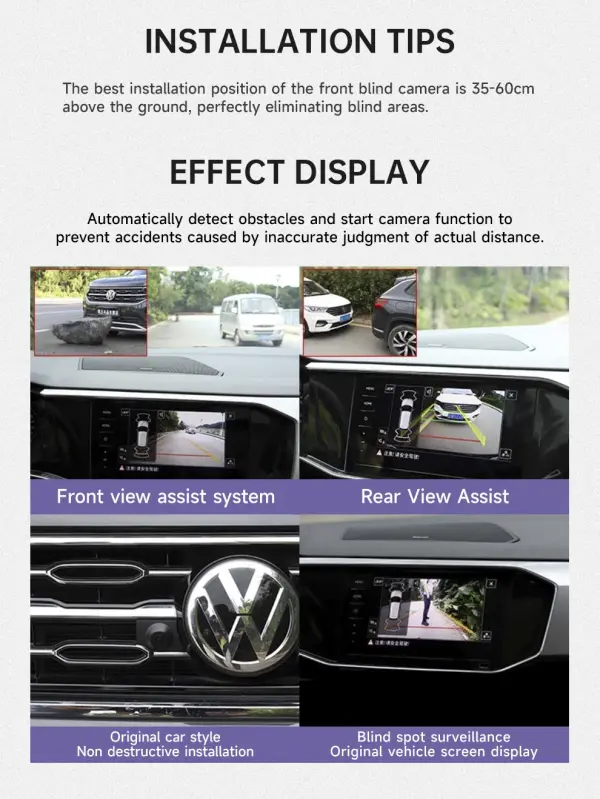
The installation requirements for dynamic trajectory lines differ across models. For instance, Toyota Vios owners who wish to experience dynamic trajectory lines may need to additionally configure a front-wheel steering angle sensor to obtain data on the front wheels' steering angle. This indicates that the implementation of dynamic trajectory lines relies not only on cameras but also on support from other sensors.
Applicability of Dynamic Trajectory Lines
Not all vehicle models are equipped with dynamic trajectory lines. For example, most factory-installed reverse cameras feature static guidelines, with dynamic trajectory lines typically reserved for premium models. Therefore, drivers need to weigh their needs and budget when selecting a vehicle model.
In summary, the specific differences in dynamic trajectory lines across different vehicle models are mainly reflected in their configuration methods, accuracy, implementation approaches, installation requirements, and applicability. These differences necessitate that drivers carefully consider their needs and budget when choosing a vehicle model.
How Does the Real-Time Responsiveness of Dynamic Trajectory Lines Affect Their Accuracy?
The real-time responsiveness of dynamic trajectory lines significantly impacts their accuracy, primarily in the following aspects:
Real-Time Performance and Trajectory Prediction Accuracy
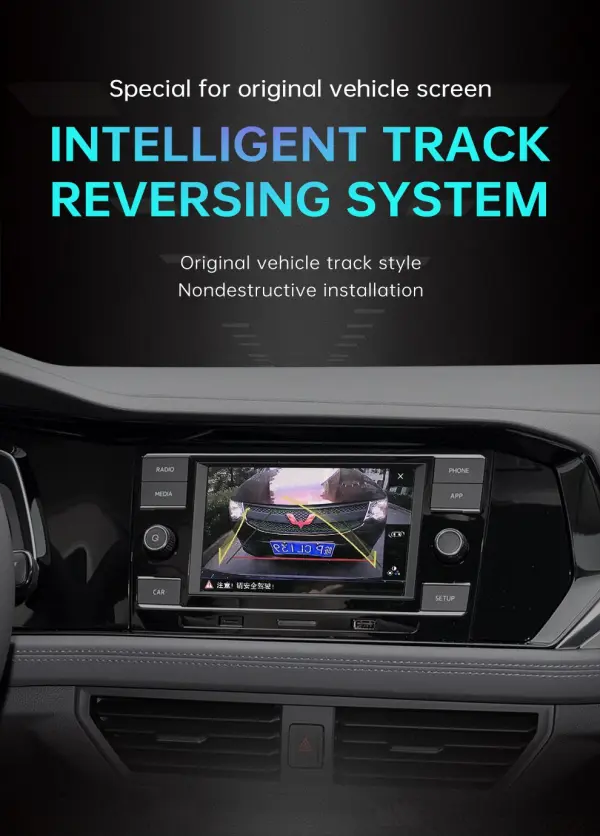
The real-time responsiveness of dynamic trajectory lines determines their ability to promptly reflect the motion state of the vehicle or equipment. For example, in reverse trajectory lines, dynamic trajectory lines calculate the rear wheel's motion path in real time based on the steering wheel's angle, enabling reversing guidance and obstacle warnings. This real-time capability allows the trajectory lines to more accurately reflect the vehicle's actual position, reducing errors caused by delays. Additionally, in intelligent vehicle dynamic obstacle avoidance control, the use of real-time trajectory update networks (such as LSTM neural networks) can significantly improve trajectory prediction accuracy, especially over shorter prediction time horizons. This indicates that stronger real-time responsiveness leads to higher trajectory prediction accuracy.
Dynamic Response and Trajectory Smoothness
The dynamic response capability of trajectory lines not only affects their real-time performance but also influences the smoothness and stability of the trajectory. In machine tool processing, the trajectory dynamic response adaptive function ensures smooth trajectory motion by adjusting parameters such as maximum axis speed, acceleration, and jerk. If the trajectory speed changes too frequently or drastically, it may cause trajectory fluctuations, thereby reducing accuracy. For instance, during high-speed machining, axis jerk is a major factor contributing to trajectory speed fluctuations, particularly in high-speed zones. Therefore, stronger dynamic response capabilities result in smoother and more accurate trajectories.
Real-Time Response and System Stability
The real-time responsiveness of dynamic trajectory lines also affects the overall stability of the system. In digitally controlled switching power supplies, trajectory prediction control algorithms improve dynamic response speed, avoiding system oscillations that occur during transitions between dynamic and steady states in traditional control methods. This indicates that real-time responsiveness not only impacts trajectory accuracy but also system stability. If the trajectory response is not timely, the system may experience oscillations or instability, thereby reducing overall performance.
Real-Time Response and Multi-Sensor Fusion
In complex environments, the real-time responsiveness of dynamic trajectory lines can be combined with other sensors (such as reverse radar, GPS, base stations, and Wi-Fi positioning systems) to improve trajectory accuracy. For example, in tests of logistics fleets, using GPS alone resulted in 5–8 instances per hour of positioning deviations exceeding 50 meters. However, after integrating base station and Wi-Fi positioning, positioning deviations were reduced to 1–2 instances per hour, effectively enhancing the accuracy of real-time trajectories. This demonstrates that stronger real-time responsiveness of dynamic trajectory lines, when combined with other sensors, leads to higher overall accuracy.
Dynamic Response and System Optimization
In optimizing trajectory dynamic response, process-specific dynamic response settings can preset different dynamic response modes for various working conditions (such as tapping, rough machining, and fine machining). Corresponding modes can then be invoked in part programs to activate the optimal dynamic response. This optimization method can further improve trajectory accuracy and efficiency. If the dynamic response is set to an unreasonable configuration, it may result in inaccurate trajectories or reduced efficiency.
In conclusion, the real-time responsiveness of dynamic trajectory lines significantly impacts their accuracy. Stronger real-time performance leads to more accurate trajectory predictions; smoother dynamic responses result in more stable trajectories; better system stability enhances overall performance; multi-sensor fusion further improves trajectory accuracy; and optimizing dynamic response settings enables more efficient trajectory control. Therefore, improving the real-time responsiveness of dynamic trajectory lines is key to enhancing their accuracy.


